Private Tour in Genoa with a Local Tour Guide
Private tour in Genoa with a local guide: a tailor-made visit through the historic centre, caruggi, Palazzi dei Rolli with personalized timing and route.
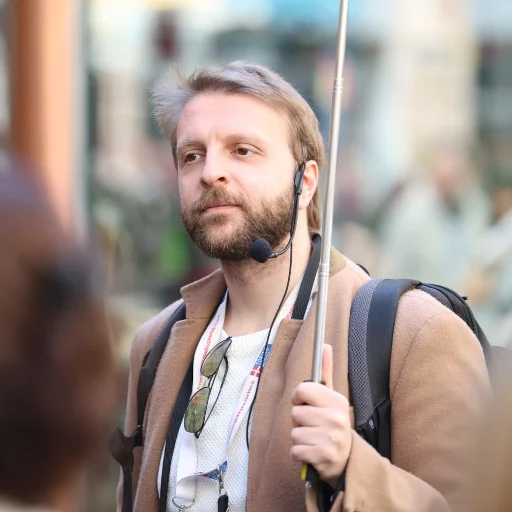
Private tour in Genoa with a local guide: a tailor-made visit to discover the city with more freedom
Planning a visit to Genoa is not always straightforward. The city has a very large historic centre, neighbourhoods that are close to each other but different in history and atmosphere, noble palaces facing monumental streets, narrow alleyways, churches, museums, workshops, views of the port and places that are not always easy to understand at first glance.
For this reason, a private tour in Genoa can be a useful choice. Not because it makes the visit “exclusive” in a luxurious sense, but because it allows the itinerary to be built around the time available, the interests of the group and the way visitors want to get to know the city.
A private guide in Genoa can help you find your way, choose what is really worth seeing, avoid routes that are too scattered and connect places with the city’s urban, artistic and social history. The result is a clearer visit, with a sustainable pace and the possibility to stop, ask questions, go deeper into a topic or simplify things when needed.
Why choose a private tour in Genoa
A private tour is designed for those who do not want to follow a standard programme. Genoa can be visited in many different ways: focusing on the historic centre, the caruggi, the Palazzi dei Rolli, the relationship with the sea, mercantile history, art, local traditions or a first general introduction to the city.
The main difference compared to a group tour is flexibility. During a private guided tour in Genoa, the route can be adapted before the visit and, in part, also during the tour itself. If a family needs a slower pace, if a couple wants to spend more time in less crowded places, or if a small group is interested in medieval history or noble palaces, the tour can follow a more specific direction.
This does not mean improvising without structure. A good custom tour in Genoa keeps a clear framework: realistic timing, coherent stops, understandable explanations and a guiding theme. Personalization is useful when it makes the visit more suitable for the people taking part, not when it simply adds too many things.
Who a private guided tour is suitable for
A tailor-made tour in Genoa can suit very different kinds of visitors.
For a couple, it can be a way to discover the city without rushing, alternating well-known places with quieter corners. For a family, it allows explanations, stops and walking pace to be adjusted according to the age of children or teenagers. For small groups of friends or individual travellers, it can become a way to explore specific interests, from art to local history.
It is also a practical option for cruise passengers who have only a few hours available. In this case, it is important to create a route that works with disembarkation and return times, without underestimating transfers and safety margins. Corporate guests, delegations or groups linked to events can also benefit from a private tour guide in Genoa, especially when the visit needs to be clear, well organized and suitable for people who may know little about the city.
A private tour does not necessarily have to be longer or more complex. Sometimes it is useful precisely because it helps you choose better: two well-planned hours can be more effective than an overpacked full day.
What you can visit during a private tour
The content of the visit depends on interests, available time and starting point. Some routes work well as a first introduction to the city, while others are better suited to those who already know Genoa or want to explore a specific topic in more depth.
A private tour of Genoa’s historic centre allows you to enter the oldest part of the city: squares, alleyways, churches, palaces, votive shrines, workshops and passages that tell the story of centuries of urban life. The caruggi are not just a network of narrow streets: they are a concrete way to understand how Genoa developed between the sea, trade, political power and everyday life.
A private tour of Genoa’s caruggi can include more popular areas as well as less obvious but meaningful places, always with attention to context and to the clarity of the route. Not every alley has the same interest for every visitor; a local guide helps select the most significant ones, avoiding a visit that becomes just a casual walk.
Strada Nuova and the Palazzi dei Rolli are central for those who want to understand aristocratic Genoa through architecture, representation and international relations. A private tour of the Palazzi dei Rolli can focus on façades, courtyards, monumental entrances and, when possible and depending on opening conditions, some interiors or museums. Since opening times and visiting arrangements may change, it is always advisable to check them before planning the itinerary.
The Porto Antico can be included in a more general route, especially for first-time visitors or for those who want to understand the historical relationship between Genoa and the sea. It should not be seen only as a contemporary leisure area, but as part of a much longer port history.
How the organization of the tour works
Only a few details are needed to organize a private tour, but they should be clear. The date is the first element to define, followed by the number of people and the time available. A visit can last a few hours or develop into a half-day itinerary; the choice depends on how much you want to explore and how used the group is to walking.
It is also useful to indicate the starting point: hotel, station, cruise terminal, city centre or another agreed location. In some cases, the route can begin near the arrival point; in others, it may be better to reach a more suitable area from which to start reading the city.
The language of the tour, any specific interests and practical needs help build a more appropriate itinerary. For example, it may be important to know whether there are children, people with reduced mobility, tight schedules, a desire to avoid steep streets, the need for a break or a preference for less crowded places.
A local guide in Genoa can suggest what is realistic to include and what might make the route too tiring or fragmented. This step matters: personalizing a tour does not mean adding endless stops, but choosing the ones that make sense for that group.
Private tour or group tour: what really changes
A group tour can be a good solution for those looking for a ready-made proposal, with fixed times and itinerary. It is often suitable for visitors who want a first introduction and do not have particular needs.
A private tour, on the other hand, offers more freedom. The pace can be slower or more intense, questions have more space and the route can be built around a specific interest. If the group is interested in art, more time can be dedicated to churches, palaces or museums. If the aim is to get oriented before continuing the visit independently, the itinerary can focus on a clear route through the historic centre, Porto Antico and Strada Nuova.
The difference is not only the size of the group, but the kind of attention given. During a private visit, the explanation can be adapted to the participants’ level of knowledge: more introductory, more historical, more practical or more thematic. This makes the visit less rigid and often more useful for those who really want to understand what they are seeing.
Timing, routes and mistakes to avoid
One of the most common mistakes is trying to see too many places in too little time. Genoa is compact in some areas, but it is not always simple to cross: alleyways, slopes, narrow streets and changes of neighbourhood require some planning.
For a first visit, it may make sense to focus on the historic centre, the main caruggi, Strada Nuova and part of the Porto Antico. If the interest is more specific, for example the Palazzi dei Rolli or the history of noble families, it is better to reduce the number of stops and spend more time understanding the buildings.
For families and small groups, short breaks can be helpful, especially in the warmer months or on very busy days. Cruise passengers should avoid routes that take them too far from the return point, unless there is enough time and the organization is clear.
The best period depends on the type of visit. Spring and autumn are often pleasant for walking, but Genoa can be visited all year round. In summer, it is worth considering cooler times of day; in winter, it may be useful to include indoor spaces, museums or accessible palaces, always checking openings and availability in advance.
An example of a tailor-made itinerary
A possible introductory itinerary could start in the historic centre, cross some significant caruggi, reach areas linked to the city’s religious and commercial life, continue towards Strada Nuova and end at the Porto Antico or in a convenient area from which to continue independently.
A more artistic route could focus on palaces, churches and museums. An itinerary designed for those with limited time could select fewer stops but explain the essential connections clearly: how Genoa developed, why the historic centre has this shape, and what role the port, noble families and commercial activities played.
The value of a private tour in Genoa lies precisely in the possibility of choosing a guiding theme. There is not just one correct way to visit the city: there is a route that is better suited to the time, interests and energy of the people discovering it.