Group tours in Genoa with a local tourist guide
Organize a group tour in Genoa with a local tourist guide: cruise passengers and organized groups through the historic centre, Rolli Palaces and caruggi.
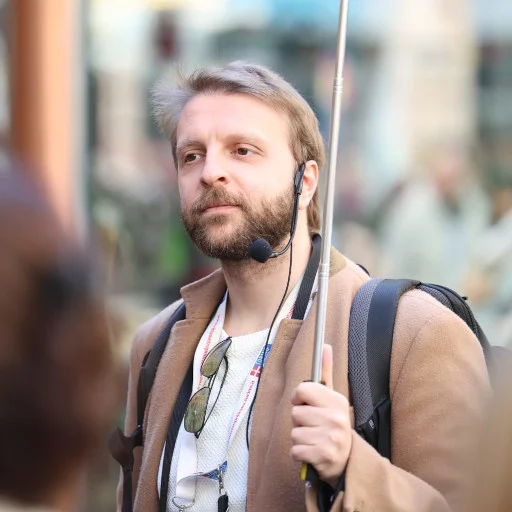
Group tours in Genoa with a tourist guide
Organizing a trip to Genoa for a group requires more attention than planning an individual visit. It is not just a matter of choosing “what to see”, but of creating an itinerary that works for several people: realistic timing, well-planned stops, clear explanations, manageable walking routes and a coherent thread connecting the places visited.
A group tour in Genoa with a tourist guide is designed precisely for this purpose: to help the group understand the city without getting lost in the many places, streets, names and historical references that Genoa presents from the very first impression. The historic centre, the caruggi, the Palazzi dei Rolli, the Porto Antico and the main monumental areas can be visited in many different ways. What makes the difference is how the route is organized, especially when the group is large, has limited time or includes people with different backgrounds and interests.
A guided group visit should not feel like a heavy lecture or a list of dates. It should be a well-structured experience, able to give meaning to the places visited while keeping a rhythm suited to the group.
Who a group tour in Genoa is for
This service is designed for already organized groups that wish to visit Genoa with a local guide and with an itinerary planned in advance. It can be suitable for cultural associations, clubs, groups of friends, travel agencies, tour operators, companies, corporate guests, private small groups and cruise passengers stopping in the city.
A guided group tour in Genoa can also be useful when the group does not have specialist interests but simply wants to understand the city better: how it is structured, why certain streets are important, how to recognize the signs of its mercantile and aristocratic past, and how to distinguish between very well-known places and less obvious but meaningful corners.
For school or university groups, the organization needs to be assessed according to the age of participants, educational goals and available time. A route for students requires a different language and pace from one designed for a cultural association or a group of cruise passengers.
Why a guide is useful for a group
When visiting Genoa as a group, one of the main risks is dispersion. The historic centre is fascinating precisely because it is dense, layered and irregular, but these same qualities can make orientation more difficult, especially in the caruggi and in areas where the streets are narrow.
A tourist guide in Genoa for groups helps keep the route readable and coherent. This does not mean controlling every minute rigidly, but giving the group a clear direction: where to stop, what to observe, which passages to avoid when time is limited, and how to connect the different places to one another.
For an organized group, the guide is also useful in adjusting the explanations. A cultural association may prefer a more historical and artistic approach; a corporate group may need a lighter and more dynamic visit; cruise passengers often require a clear itinerary compatible with the ship’s schedule; a group of friends may be looking for an enjoyable route that is not too technical but still rich in content.
The value of the visit is not in seeing as many places as possible, but in understanding better the places that have been chosen.
Possible itineraries for groups
A Genoa tour for groups can be built around different themes and durations. The choice depends on the time available, the starting point, the interests of the group and the desired level of detail.
A classic route can begin in the historic centre, crossing some areas of the caruggi and reaching the most representative monumental areas. This is a good solution for those visiting Genoa for the first time and wanting to understand the city as a whole: its medieval structure, its relationship with the sea, noble families, squares, churches, historic shops and urban transformations.
Another option is a Genoa historic centre group tour, more focused on the alleys, squares and places that tell the story of daily life in the city. In this case, the route can be very concrete: how the urban fabric developed, why some streets are so narrow, which activities took place in different districts, and how monumental architecture and ordinary life coexist.
For groups interested in art and the aristocratic history of the city, an itinerary focused on the Palazzi dei Rolli and Strada Nuova allows visitors to explore the theme of noble Genoa and its international role. Depending on the programme, the visit may include an external route, a selection of accessible palaces or a path connected with museums. Access conditions may vary, so openings, tickets and availability should always be checked before the visit.
The Porto Antico, or Old Port, is suitable for groups wishing to connect the city’s maritime history with contemporary Genoa. It can be included in a wider itinerary or become the final point of a route starting from the historic centre.
How to choose duration and itinerary
For a group visit, it is important to be realistic. In Genoa, distances are not measured only in metres: slopes, descents, narrow streets, crossings, possible breaks and the time needed to keep the group together all need to be considered.
A short visit of around two hours can work well as a first orientation in the historic centre or as a focused route through the caruggi and monumental areas. A half-day visit allows for more depth, more stops and a better rhythm in the explanations. For groups with specific interests, such as art, architecture, the history of the Republic of Genoa, local traditions or the relationship with the sea, it may be useful to create a themed itinerary.
A common mistake is trying to include too many places in the same route. For a group, seeing less but understanding more is often the most effective choice. An itinerary that is too full risks becoming tiring and leaving little room for questions, pauses and observation.
The time of year also affects the organization. In warmer months, it may be preferable to avoid overly exposed routes during the central hours of the day. On days with heavier tourist flows, entrances, stops and meeting points should be planned carefully. Practical conditions can change, so it is always advisable to check in advance for closures, works, events or access restrictions.
Useful information for organizing the visit
To organize a visit to Genoa for an organized group effectively, some information is essential from the beginning.
The most useful details are the date of the visit, the approximate number of participants, the desired duration, the language, the type of group and the arrival or departure point. For example, a group arriving by coach will have different needs from a group starting from the cruise terminal, a railway station or a hotel in the city centre.
It is also useful to indicate the level of interest: introductory visit, cultural route, historical and artistic focus, itinerary through the caruggi, visit to the Palazzi dei Rolli, route connected with the port or local traditions. If there are people with reduced mobility, pushchairs, limited time or specific needs, it is best to mention this in advance, so that unsuitable sections or difficult stops can be avoided.
A guide for groups in Genoa does not simply explain monuments: the guide helps turn practical needs into a route that can actually work. This is particularly important for agencies, companies and organizers who need to offer the group a clear and sustainable programme.
Group tour or private tour: which option to choose
A group tour is suitable when people are travelling together and share the same timing, programme and objectives: associations, agencies, corporate groups, cruise passengers, friends or cultural groups. In this case, the visit is designed to keep the group together and offer content that is understandable for everyone.
A private tour, on the other hand, is more suitable for couples, families, small groups, individual travellers or people with limited time who want more freedom. It allows the pace to be adapted, questions to be asked more easily, certain places to be explored in greater depth and the balance between history, art, daily life and local details to be adjusted.
The main difference is not the value of the visit, but the way it is organized. The group tour requires more attention to collective management; the private tour leaves more room for personal needs. Both formats can work well, provided they are planned consistently with the people taking part.
Tours for agencies, associations and cruise passengers
A Genoa tour for agencies needs to be clear in timing and reliable in organization. Travel agencies and tour operators often need a route that fits into a wider programme, with defined schedules, precise meeting points and content suited to the profile of the participants.
For a guided tour in Genoa for associations, the approach can be more cultural, with greater attention to urban history, palaces, churches, districts and the changes the city has undergone over time. Associations often appreciate routes that do not stop at the most famous places, but help visitors understand how Genoa was formed and transformed.
A Genoa tour for cruise passengers requires particular attention to timing. Those arriving by ship often have only a few hours available and need to return on time. In these cases, it is advisable to choose a focused itinerary, well connected to the starting point and without unnecessarily complicated transfers.